Immersive vocational evaluation by Incuentro
Career planning that starts with real work.
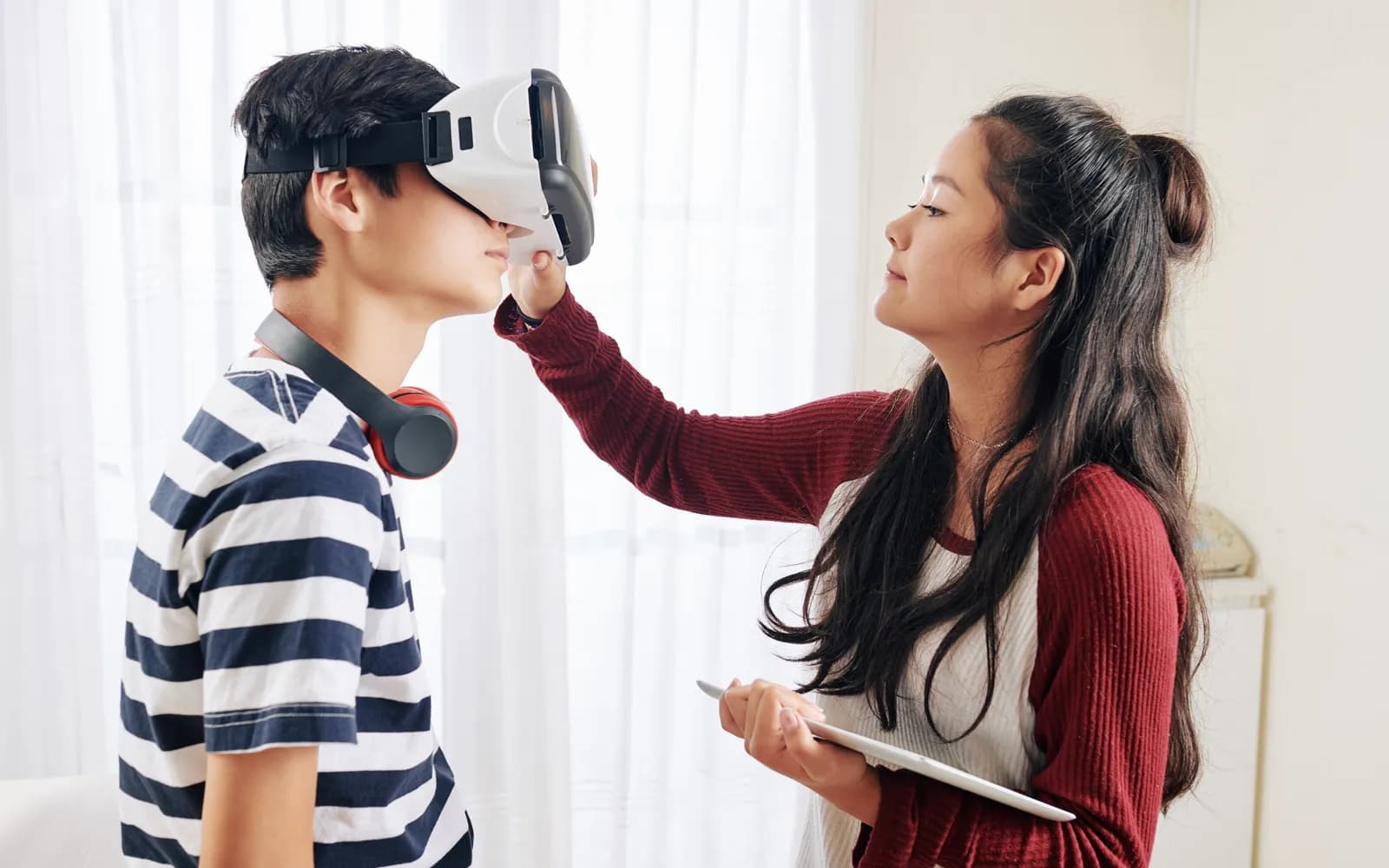
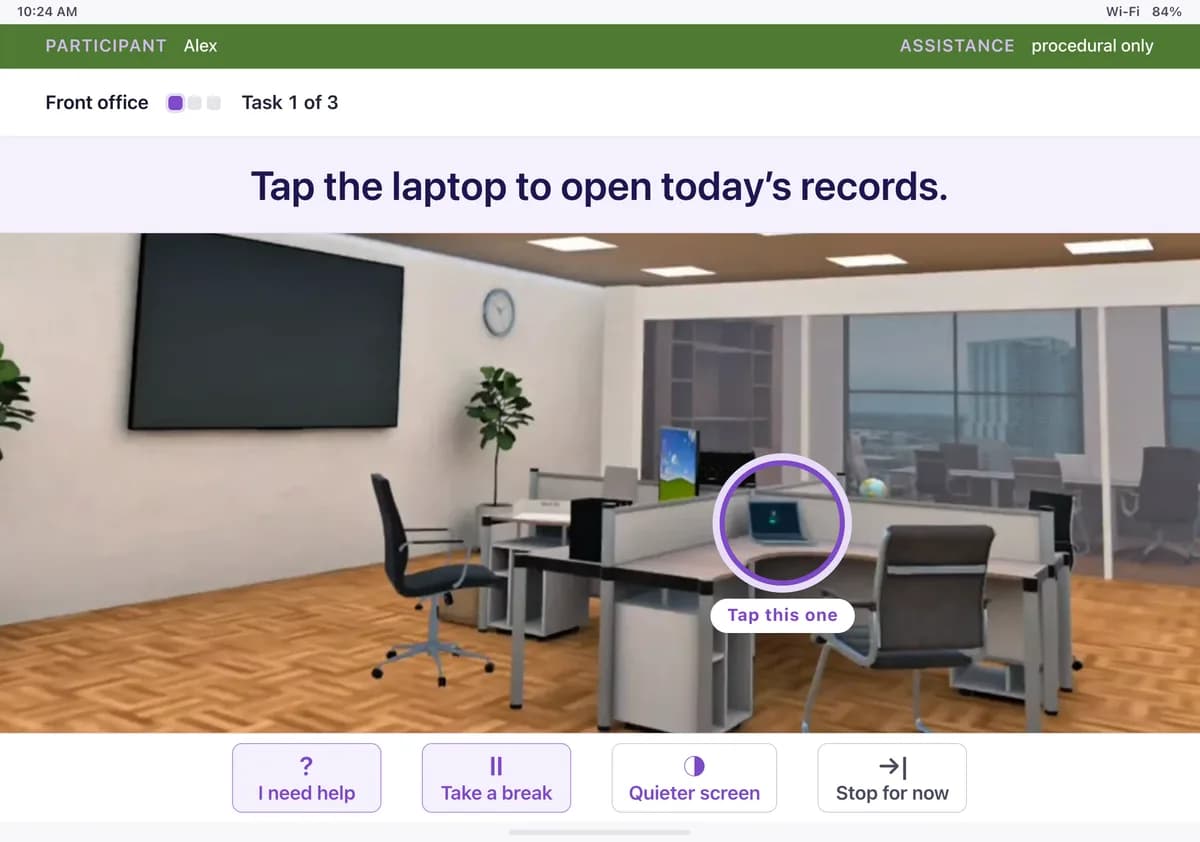
What once took a specialist weeks now takes hours on a virtual reality headset or iPad.
For teams in
- Schools and transition programs
- Vocational rehabilitation agencies
- CTE and workforce programs
- HR departments
How it works
How a session works
One session, five steps. Your client does real work, and you get a report you can act on.
Do the work
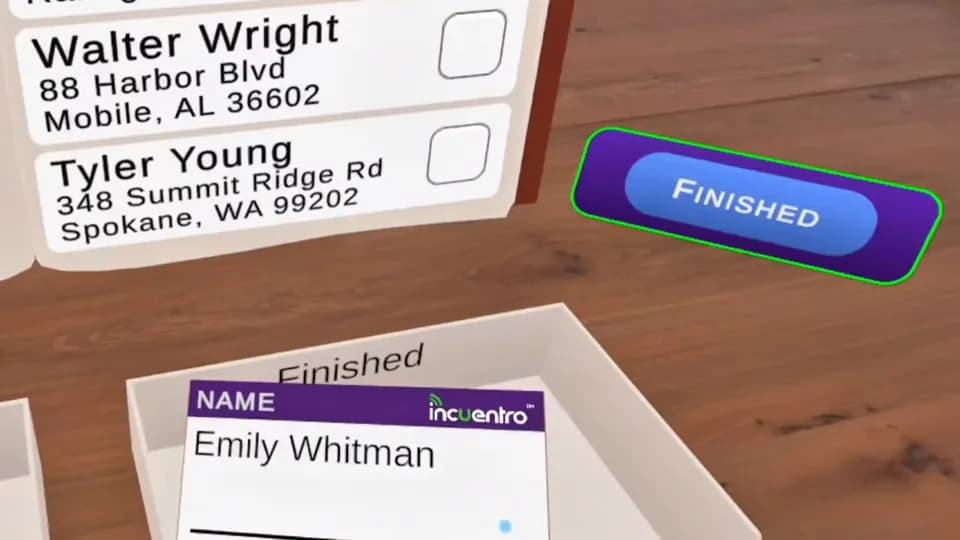
Your client steps into a virtual office and does realistic job tasks, like entering records into a form, matching name badges to an address list and filing.
Have a conversation
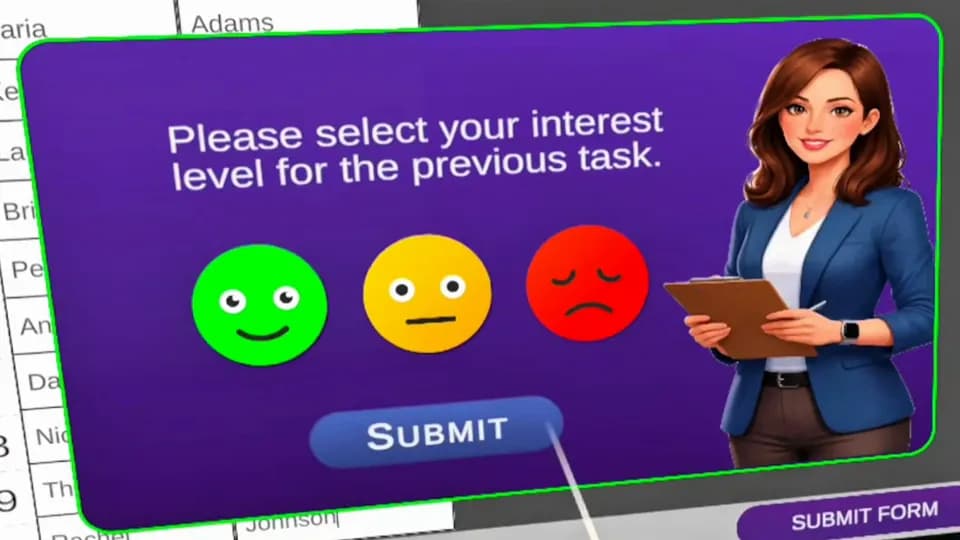
Between tasks, a friendly guide checks in and asks what they enjoyed, so their interests count too.
Scores get measured
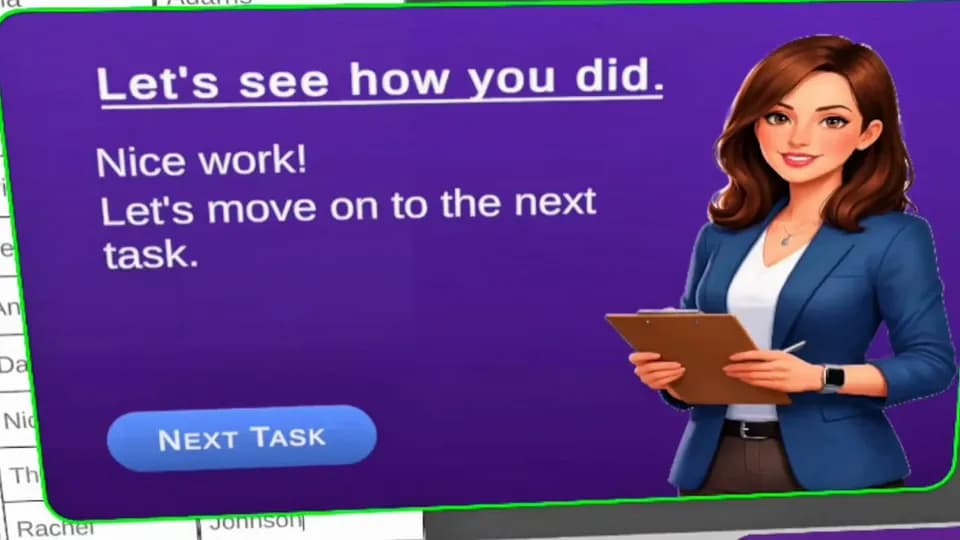
What they do during each task becomes behavioral data, and that data is scored.
Careers matched
Their results are matched to real occupations, so you can see which jobs are worth exploring.
Report generated
The report is ready in your dashboard, for you to go over together.
The reports
One evaluation. Two reports. Better career decisions.
From school transition planning to employment and hiring, AVRAS turns observed work performance into evidence you can use.
AVRAS delivers two complementary reports, one for school programs and one for workforce development and HR, that translate real-task performance into actionable insights. Together, they help professionals identify strengths, develop individualized career plans, and make more informed employment decisions.
Education report
Jordan R., transition planning
Sample
Vocational strengths
- Follows multi-step procedures
- Accurate on detailed work
Needs
Extra time when task rules change
Career interests
- Office and clerical work
- Retail stocking
What AVRAS reports deliver
Objective, performance-based evidence
Measurable capabilities demonstrated through real work tasks.
Personalized career recommendations
Career matches aligned with demonstrated strengths, capabilities, and preferences.
Clear, traceable results
Transparent scoring and supporting performance data that explain how conclusions were reached.
Actionable development insights
Identified strengths, growth areas, and skill-building opportunities to guide career preparation.
Evidence-based planning and placement
Insights to support school transition planning, individualized employment plans, and better job matching and hiring decisions.
Workforce development report
Jordan R.
Sample
Demonstrated capability
Conscientious Execution Strong
| Stockers and Order Fillers | Strong |
|---|---|
| Pharmacy Aides | Strong |
| Library Assistants, Clerical | Good |
Growth area
Picking up speed after a rule change
Who it serves
Built for decisions that matter
For schools
Support transition compliance
Document vocational strengths, needs, and career interests with performance-based assessment evidence that supports IEP transition planning, individualized services, and transition compliance requirements.
For vocational evaluators
Strengthen employment plans
Move beyond self-report and subjective observations with evaluator-grade evidence to support career recommendations, training decisions, and individualized plans for employment.
For employers
Better matches. Better hires.
Understand demonstrated capabilities and their alignment with occupational demands to identify stronger job matches, support placement decisions, and create pathways to successful employment.
Every recommendation backed by performance. Every career path grounded in potential.
The evidence
Evaluator-grade evidence at a fraction of the cost.
When something couldn’t be measured well, the report tells you instead of filling in a guess. So before you sit down with a client, you know what each result is based on.
How sure the score is
Each score has a confidence level based on how much the session could actually capture. Low confidence is always flagged for you.
Where it came from
Every result says whether it came from what the client did, something they told us, or a questionnaire.
Which formula was used
Each score records the formula version behind it, so results from different versions never get compared as if they were the same.
What wasn’t measured
If a session couldn’t measure a skill, the report says “Not assessed on this platform.” It never shows up as a zero.
The dashboard
What’s in your dashboard
Clients take the assessment in AVRAS. Everything your team does after that happens here.
Skills matched to real jobs
Trace every suggested job back to what your client did.
Notes on every report
Add what you noticed and share it with your team.
Run the session live
Start, pause or end a session from the room.
Filters for your program
Narrow the job list to the work your program places people in.
Your team and seats
Invite counselors and keep track of seats in one place.
Confidence on every score
See what each result is based on before you share it.
Our approach
Built for Accessibility. Designed for Everyone.
AVRAS was developed with the unique needs of autistic individuals and people with other disabilities in mind, but its thoughtful design makes assessment easier for everyone.
By reducing unnecessary barriers, accommodating different ways of interacting, and creating a predictable experience, AVRAS gives individuals more opportunities to demonstrate what they can do.
Predictable by Design
Fewer distractions. More focus.
Clear, consistent screens help reduce uncertainty and sensory overload. No flashing elements, unexpected animations, or sudden changes that can interfere with performance.
Progress Without Pressure
Work at your own pace.
Timers count up instead of down, reducing time-related anxiety and allowing individuals to focus on completing tasks rather than watching a countdown.
Flexible Ways to Interact
Different abilities. Equal opportunity.
Large buttons and alternative ways to interact, including tapping instead of swiping, accommodate different motor abilities and individual preferences.
Less Reliance on Language
Show what you can do, not just what you can say.
Most assessment tasks minimize reading and verbal communication demands, allowing individuals with different language and communication abilities to demonstrate their skills through performance.
Designed with disability in mind. Built to reveal potential in everyone.
The team
The people behind AVRAS
AVRAS is made by Incuentro, whose founders have spent decades working alongside autistic people and their families.

Wendy Dawson
Co-founder and CEO
An award-winning entrepreneur who led the nonprofit Social Motion Skills for 12 years before co-founding Incuentro in 2018.

Brandi Timmons, MEd, BCBA, LBA
Co-founder and Education Director
A special educator with more than 20 years of experience who builds programs around the strengths of autistic children and adults.
Is AVRAS a diagnostic tool?
No. AVRAS suggests jobs to explore with a counselor. It doesn’t diagnose anything, and it doesn’t decide whether someone is employable or eligible for services.
What does a seat cover?
One client, for the length of your plan. That includes all of their sessions and every report that comes out of them. Counselor and admin accounts don’t use seats.
Who owns the assessment data?
You do. Each organization’s data is kept separate, and every report view, note and export shows up in your access log.
Interested in AVRAS for your program?
We’ll set up a time to show your team a live session and a sample report, and answer any questions about seats and setup.
Request a demo